
1. Introduction |
Ice plays a role in commercial food processing operations particularly in seafood handling, food preservation, beverage preparation and other applications that require controlled cooling. Deciding between options such as purchasing ready-to-use crushed ice however is one consideration in this context. Other questions relate to how this requirement fits into existing supplies how the ice is prepared and delivered to use points and what other equipment factors must be taken into account at the facility.
For some operations buying crushed ice may be sufficient for daily requirements while for others an ice crusher may be necessary or more cost‑effective. Either approach has advantages and disadvantages depending on production volumes, ice type and supply availability, required particle size and other considerations in the context.
Understanding the difference between crushed ice and a commercial ice crushing machine can help food‑processing businesses to examine their options. Determine what type of equipment if any suits their processing requirements most effectively.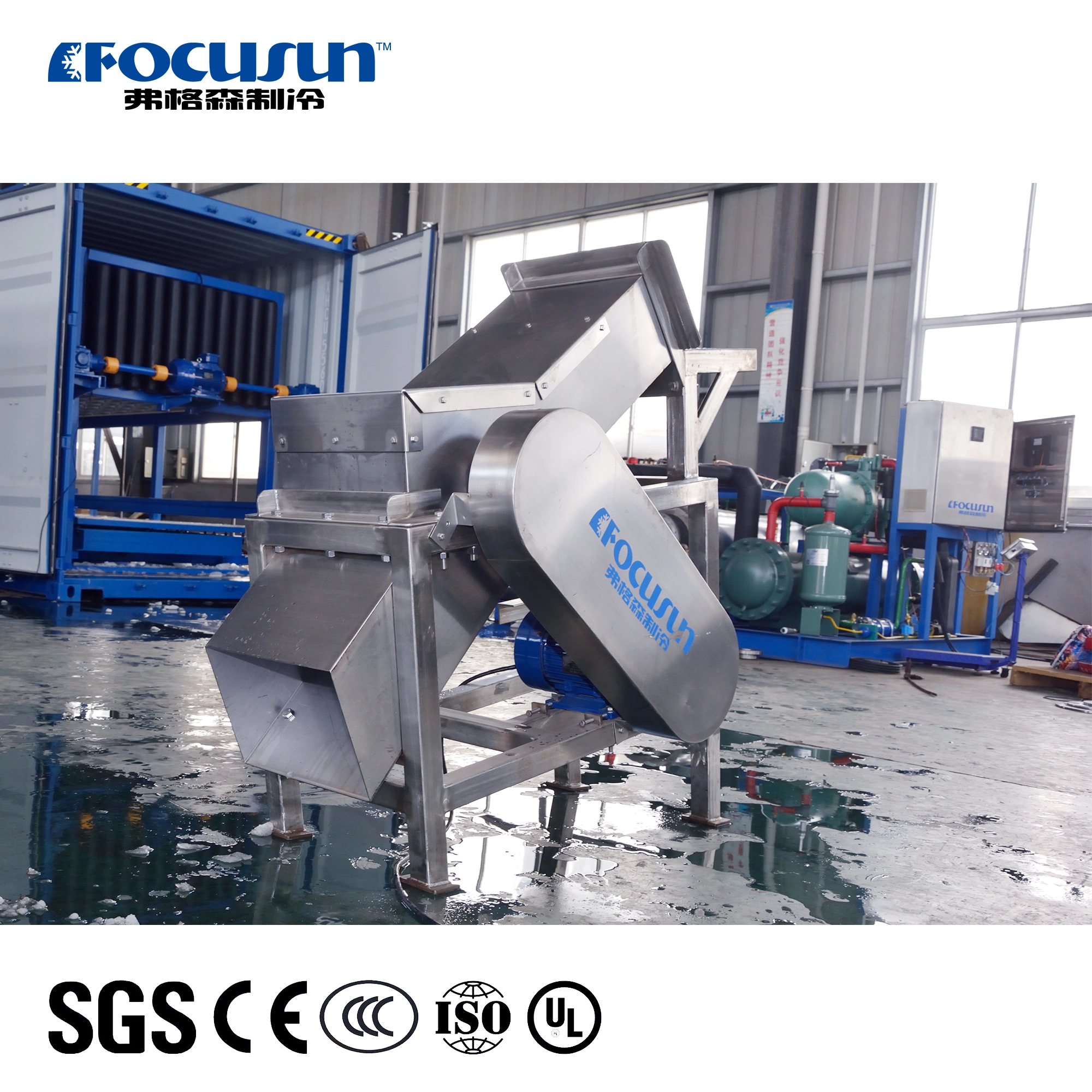
2. Understanding Ice Requirements in Commercial Food Processing |
Commercial food processing covers a variety of operations from handling seafood and preparing products to packaging processes. Processing requirements vary with these applications so a business should always examine what use it wants to make of ice.
The type and size of ice can impact its ability to make appropriate contact with products for effective cooling. So considerations should include how the business wants or needs the ice distributed within the processes involved. For example smaller particle sizes can suit some applications due to the shape of some food products but other operations can involve different requirements in this regard.
Beyond particle size businesses should examine other issues when determining what type of crushed‑ice equipment if any to purchase or use:
Considering these issues can help a business avoid buying machinery based on theoretical capacity or a marketing claim.
3. Crushed Ice vs. Crusher: Understanding the Difference |
When choosing between the options of buying crushed ice or purchasing a crusher for in‑house use it is essential to appreciate that these are two concepts.
Crushed ice is the product of the process while an ice crusher machine is a piece of equipment that enables the transformation from one shape and size of ice to another. Depending on the intended application a business can buy crushed ice from a supplier or make it on site with appropriate equipment.
An ice crusher machine does not always have one input so a business should confirm with a supplier what type of ice it can use to produce the required output size. The options can include block, tube or flake ice depending on the availability and preferences of the business. Verifying this is a vital step in the purchasing process. For instance, what’s the difference between crushed ice and flake ice, and what’s their greatest practical value? You can refer to this informative overview.
In some cases, buying ice may be more appropriate for a business particularly if it has lower daily demands or if there is a local supplier of the required ice size available. Having an in‑house crusher however may be more cost‑effective for some businesses those with existing ice‑making equipment and a consistent need, for crushed‑ice products.
In either case a business should look closely at what it needs and at the cost of each possible choice.
The daily demand, equipment cost, storage, labour, maintenance and other matters must all be weighed before a decision is made.
4. Key Factors When Choosing an Industrial Ice Crusher |
When a food‑processing business is looking at an ice crusher it should check several key elements to see if the option fits the intended use. These elements can include:
Crushing capacity: Before picking an ice crusher a business must find out how much crushed ice it will need to make. Ask the supplier for the machine’s daily capacity or if the business already knows the required output choose a machine that can meet that need. For instance, Focusun lists a capacity from 3 to 20 tonnes per hour on its site: https://www.focusun.com/1470.html
Ice type and size: A business must always check with the supplier which ice type it can feed into the machine and what size of ice it will consistently produce. Focusun’s website mentions options with its adjustable crushing principle but it is best to talk with a specialist instead of guessing that a particular machine will handle an odd requirement.
Construction and cleaning: Hygiene matters a lot in food processing so a business must look at what materials the maker uses and how the machine needs to be cleaned. Focusun says the main frame is made from thickened 304 steel but buyers must still ask about the other parts of the machine and the right cleaning steps for their own setting.
Integration with existing equipment: A buyer should always think about how the ice crusher will fit with its ice‑making and delivery system so it can use the strengths of any existing machines. Focusun cites a case where an 20‑tonne‑per‑day, containerized block‑ice plant works with a crusher and a delivery system to feed fishing boats. It may be an example but it shows how an ice crusher can join other machines into a connected system: https://focusunref.com/cases-detail/middle-east-project-delivery-of-4-containerized-direct-cooling-block-ice-machines-by-focusun
Operating and maintenance requirements: To find the machine for the food‑processing line a buyer must ask the supplier about all needs: how it is installed what power it uses, safety rules how easy it is to maintain and what after‑sales help is offered. This check keeps the ice crusher in line with the plant. Avoids hidden costs.
5. Applications of Commercial Ice-Crushing Systems |
Ice crushers can help in many ways from food processing to businesses that make or sell ice.
Commercial food processing: In food processing an ice crusher can be used in ways, based on the ice size and type a business prefers. Crushed ice is commonly used to keep seafood at low temperatures, as it significantly helps maintain freshness and enhance transport transparency. The exact ice choice depends on the job. A block or tube ice maker, with or without a crusher fits some situations. When tiny ice pieces are needed a crusher becomes essential. Other food‑processing tasks may also call for ice crushing depending on the job. It is vital to confirm that the chosen ice size and type suit the purpose.
Ice supply businesses: Businesses that make block, tube or flake ice may need an ice crusher to produce smaller pieces for their clients.
In any case a business must look at its need not just pick what feels right. It should ask the supplier how ice it can expect each day and match that to the needed ice type and size plus any special needs that come with the job.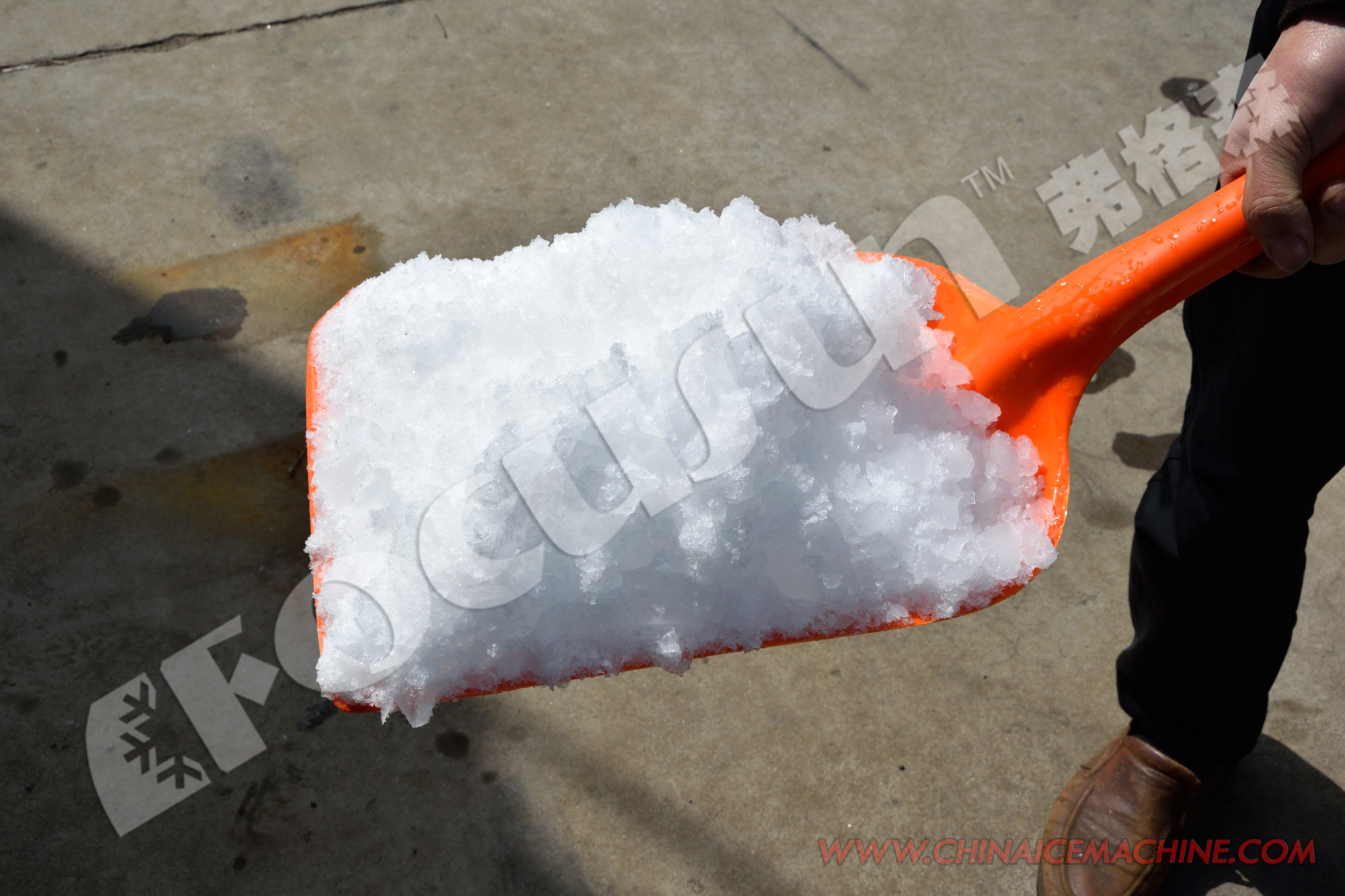
6. Focusun Ice-Crushing Solutions for Industrial Operations |
Focusun supplies a variety of ice‑making and refrigeration machines among them ice crushers. On its website Focusun lists products such as block ice machines, tube ice machines, flake ice machines, ice storage solutions and ice‑crushing equipment. https://www.focusunref.com
When evaluating the main point is to decide which application is best for a food processor looking at the needs of the operation instead of general tastes. Some businesses may decide not to buy an ice crusher because they can obtain the size of crushed ice from elsewhere. Other businesses might see an ice crusher as a must‑have if they already own ice‑making machines or can find a cheaper way to produce or supply crushed ice.
If you are looking at adding this kind of machine Focusun’s case study of an ice factory that includes an integrated ice crusher can be helpful. It shows one example, not a blanket rule. The example shows that block, tube or flake ice can be used in food processing. The details will always match the buyer’s particular needs.
Focusun has worked on projects elsewhere such as supplying a 10‑tonne block ice machine and a 3‑tonne flake ice machine to Nigeria. These cases are useful when looking at how industrial ice‑making machines work in businesses but buyers should remember that their own project may not give the same outcome.
If you want to know if a machine fits your situation give the supplier these details to help them look at options:
Looking at these points helps buyers and suppliers decide if a particular ice crusher matches the intended use.
7. Conclusion |
Choosing between buying ready‑made crushed ice and buying an ice crusher depends on how a business gets, handles and uses ice. Ready‑made crushed ice works when a supply is already available. Buying an ice crusher is better if a business owns an ice‑making machine or can get the needed size of ice at cost.
Before investing in an ice crusher a business must think about daily demand, ice type and size hygiene rules at the site, space and other needs. Focusun’s machines can help people who want to evaluate an ice‑crushing solution and find the choice. If you want to learn more about refrigeration information, free feel to contact Focusun’s engineering team.
8. Frequently Asked Questions |
Crushed ice is the product of a process. The machine that makes ice is called an ice crusher.
The ability of an ice crusher depends on the model. A buyer should always talk with a supplier to confirm which types of ice the ice crusher can handle as input and what size of ice the ice crusher can produce. Focusun’s range of machines for example can use block, tube and flake ice.
A buyer should calculate the need in terms of daily demand to find the theoretical capacity. In practice a buyer should then talk with a chosen supplier to find the capacity that matches the application.
A buyer should look at things: the capacity of the ice crusher in tonnes per hour the type of input ice the size of the output ice the materials used for the ice crusher, power needs, cleaning and sanitation rules, space and other specific needs.
Focusun’s case study of an ice factory, with an integrated ice crusher shows how this kind of system can fit into a production plan. Those who want such a system should call a Focusun representative to discuss their needs.
9. Contact Focusun |
Focusun is a leading provider of expert ice-making and refrigeration gear. With its range of ice machines, ice storage and crushing gear Focusun gives trusted solutions for industrial and commercial food-processing works, around the world.
|
Focusun Refrigeration (Shanghai) Corporation Address: Floor, T1 Office Building, No. 3299 Caobao Road, Minhang District, Shanghai China Postal code: 200000 Tel: +86-21-51089946 | Fax: +86-21-52272259 WhatsApp: +86 189 5265 2345 Enquiry email: enquiry@focusun.com Website: https://www.focusun.com/ ; https://www.focusunref.com/ |
