
Adding another ice maker will not fix a packing line that cannot clear the morning's production. Before expanding a bagged ice business, measure how much saleable ice reaches the cold room and leaves on trucks. That number, rather than the fastest machine in the building, defines the plant's useful capacity.
For Southern Hemisphere producers preparing for summer, checking throughput and packaging losses now leaves more time for trials before demand becomes urgent.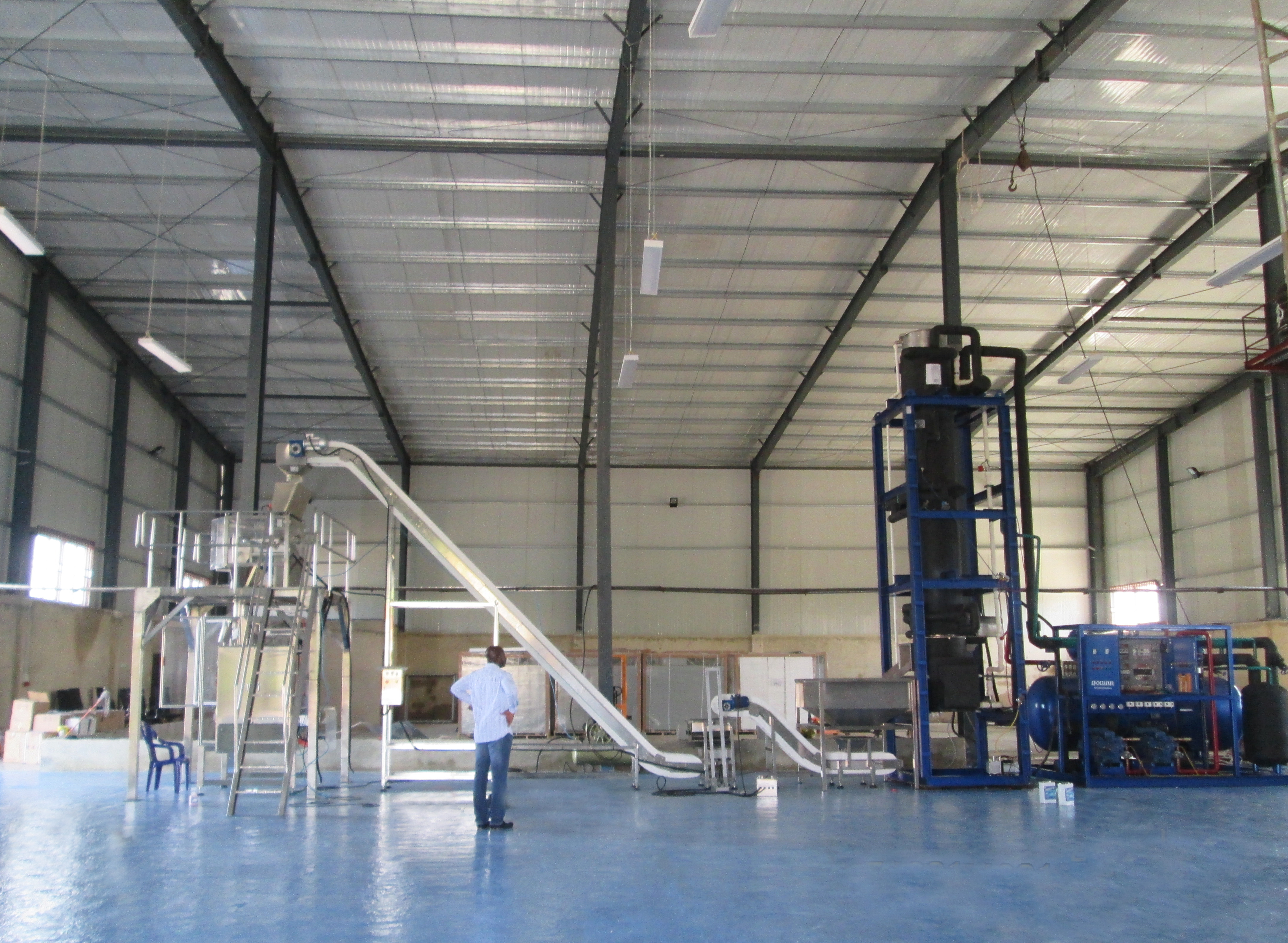
List required bags by size, customer and departure time, separating firm orders from speculative growth. Morning retail routes need finished inventory before loading; daily production totals do not establish whether that deadline is achievable.
Record one representative operating week, including a busy day. Track ice produced, bags accepted, downtime, rejected packs, stored inventory and dispatched weight. Record why the line stops. A short film change is different from two hours waiting for ice, and each points toward a different investment.
If ice production is the constraint, compare the tube ice machine range against actual summer air and water conditions. If unpacked ice accumulates while dispatch orders remain unfinished, investigate the packing and handling stages first.
Packing usually runs fewer hours than refrigeration. Allow time for cleaning, startup, breaks, film changes and product checks. Decide whether those interruptions are deducted from scheduled hours or included in a utilization allowance, so the same lost time is not counted twice.
Consider a hypothetical requirement for 12,000 kilograms of acceptable packed ice during an eight hour shift. Assume 75 percent effective utilization, including stoppages and rejects, for illustration only. The required running rate is 12,000 divided by eight divided by 0.75, or 2,000 kilograms per hour.
|
Bag weight |
Required running output |
Calculation |
Required bag rate |
|
Two kilograms |
2,000 kilograms per hour |
2,000 divided by two divided by 60 |
16.7 per minute |
|
Three kilograms |
2,000 kilograms per hour |
2,000 divided by three divided by 60 |
11.1 per minute |
|
Five kilograms |
2,000 kilograms per hour |
2,000 divided by five divided by 60 |
6.7 per minute |
A quoted bags per minute figure is meaningful only with the bag weight, ice condition and acceptance standard attached. Focusun's fully automatic ice bagging machine provides a product starting point; request a tested rate for your exact format instead of combining separate maximum specifications.
An automatic bagger needs a consistent feed. Ice that bridges in a hopper or arrives in surges can leave the weighing system waiting, even when the ice maker has enough daily capacity. Specify the ice dimensions, surface moisture, storage time and expected feed variation during supplier trials.
Check the ice conveying system as part of the same line. Transfer height, accessible cleaning points and the route through the building affect both output and maintenance. Increasing conveyor speed without assessing breakage or feed stability may simply move the problem downstream.
Time finished bag inspection, stacking, pallet changes and transfer into frozen storage. A faster bagger has little value if finished bags accumulate while staff search for an empty pallet.
Packaging deserves attention before the next peak season. The IPIA's Q3 2026 packaging update discusses film cost volatility and storage conditions. That supports reviewing supply arrangements and waste; it does not justify assuming a particular future price increase.
Confirm film compatibility, bag dimensions, roll handling and seal requirements with both the packaging supplier and equipment manufacturer. Test the actual printed material, including a replacement batch where possible. Poorly stored or unsuitable film can affect feeding and sealing, so keep stock according to the film supplier's conditions and trace material batches.
Measure saleable output and material consumption together. In an illustrative 10,000 bag run, two percent rejected packs means 200 packs require investigation or disposition. Ice recovery depends on the reason for rejection and the food safety procedure; do not automatically tip exposed or contaminated product back into the line.
An extra 50 grams in each of 10,000 bags consumes 500 kilograms of ice beyond the nominal quantity. This is a hypothetical calculation, not a recommended filling tolerance. Use calibrated equipment, periodic checks and the applicable local quantity rules to set and verify the process.
Review weight variation alongside wet ice, feed consistency, tare settings and rejected bags. Lowering the target blindly can create underweight packs. The acceptance trial should record the weight distribution over a meaningful run, not just demonstrate a few correct bags at startup.
Build an hourly inventory plan using opening stock, accepted production and dispatch. The maximum inventory determines a starting storage requirement, while the lowest inventory reveals stockout risk. Include unusable positions, access aisles and airflow when discussing cold room capacity.
Edible ice must remain protected throughout production and handling. In the United States, the FDA treats packaged ice as food; other markets have their own requirements. Automation does not replace water quality controls, cleaning, hygienic contact surfaces or safe storage. Include sanitation time and access in the line design.
Compare practical alternatives: an additional packing shift, a different feed arrangement, more finished storage, a faster bagger or increased ice production. Include labor, electricity, film, rejects, maintenance and installation in the comparison. Test the economics at ordinary demand as well as peak demand.
Before committing, agree on a trial using your ice and bags, the required good output, weight checks, seal checks and a stoppage log. Send demand by bag size, shift hours, existing equipment data, site layout and utility details through Focusun's enquiry page. Ask for a matched line proposal with clear interfaces and commissioning responsibilities.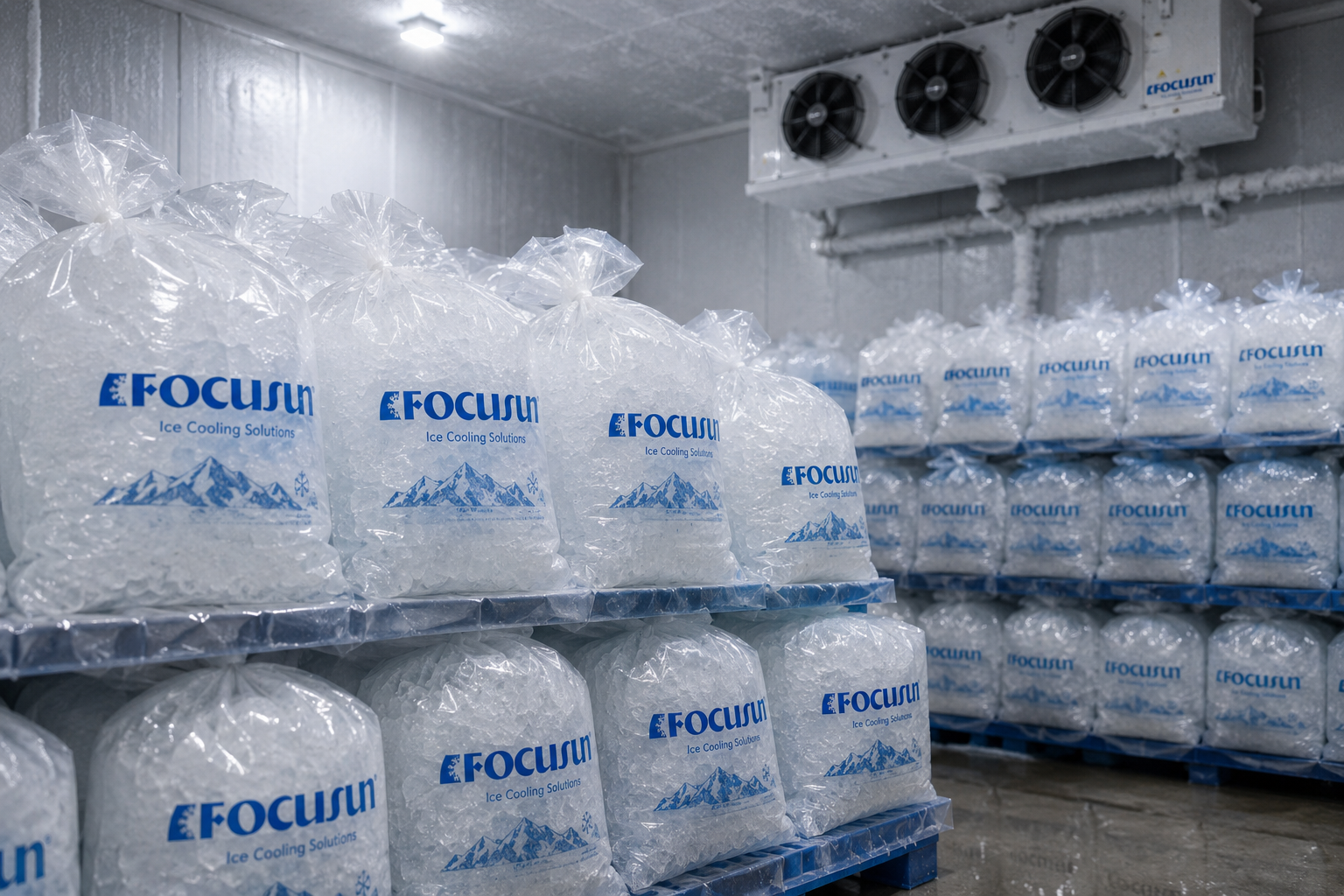
Divide the required acceptable packed weight by the available shift hours and an evidence based utilization factor, then divide by bag weight to calculate bags per hour. Convert that result to bags per minute when comparing machines. State whether cleaning, changeovers and rejects are included in the utilization factor or deducted separately. Use actual operating records where possible. The calculation should describe good finished output, not simply mechanical cycles, and the supplier should validate the result with the intended ice type, bag material and feeding arrangement before purchase.
Measure output and waiting time at each stage during the same shift. If the bagger repeatedly waits for ice while running correctly when supplied, investigate ice production and feed availability. If ice accumulates ahead of the bagger, check weighing, sealing, film changes and downstream handling. Finished bags waiting outside storage point toward another constraint. Compare these observations with dispatch deadlines, not only daily totals. A short production log can prevent buying additional refrigeration when the main restriction is packaging labor, an unstable hopper feed or insufficient cold storage access.
Many systems can handle several formats, but the allowed weight range and changeover requirements depend on the model. Confirm bag dimensions, film specification, forming equipment, weighing range, sealing arrangement and controls for every planned format. A five kilogram bag and a two kilogram bag require different cycle rates to achieve the same hourly tonnage. Include changeover time and trial waste in the production schedule. Ask the supplier to demonstrate the smallest and largest planned formats rather than assuming one successful bag size proves performance across the entire product range.
Choose according to sustained demand, labor availability, hygiene requirements and the cost of interruptions. Semi automatic equipment may suit smaller or variable orders, particularly when staff can manage feeding and handling reliably. Automatic bagging becomes worth evaluating when repetitive packing work limits output or creates unacceptable variation. Compare complete staffing needs, including replenishing film, moving bags, cleaning and responding to faults. Automation still requires operators and maintenance support. The best investment is the system that meets verified orders at an acceptable total cost, not necessarily the one with the highest advertised speed.
Possible causes include ice or moisture in the seal area, unsuitable film, poor tracking, incorrect sealing settings, worn parts or mechanical damage after packing. Inspect where the leak occurs and record whether it follows a film batch, bag format or operating condition. Follow the manufacturer's adjustment and isolation procedures; heated jaws and moving equipment create hazards. Test filled bags under realistic cold storage and handling conditions. A seal that looks acceptable immediately after filling may fail later, so checking only empty bags or a brief demonstration can miss the problem.
Begin with calibrated weighing equipment and a documented sampling method. Check tare settings, feed consistency, vibration, ice moisture and the timing of the filling cycle. Record the spread of weights rather than adjusting from a single bag. Set the process according to applicable quantity rules and customer specifications, then monitor it during normal production and after changeovers. Avoid reducing the target simply to save ice, since that can create underweight packs. Stable feeding and verified measurement usually provide a sounder basis for reducing unnecessary giveaway without compromising product compliance.
Calculate inventory over the operating schedule, starting with opening stock and adding accepted production while subtracting dispatch. The highest expected inventory helps establish storage capacity; include a justified contingency for transport delays or equipment interruptions. Then convert stock into actual bags, pallets and usable positions, allowing for aisles, airflow and access. Do not assume a standard number of storage days suits every business. A plant serving morning routes may need a different buffer from one dispatching throughout the day, even when both have the same nominal ice production capacity.
They may be compatible with the same platform, but each product should be tested. Piece size, surface moisture, breakage, bulk density and flow behavior affect feeding, weighing and sealing. Changing the ice format can alter output even if the bag weight stays unchanged. Provide samples or detailed specifications and ask whether changes to the hopper, conveyor, weighing settings or filling chute are needed. Acceptance should cover the intended products under realistic storage and temperature conditions, rather than treating compatibility listed in a brochure as a guarantee of identical packing performance.
The installed cost depends on feeding equipment, weighing and sealing technology, bag formats, controls, discharge handling, utilities and site modifications. Shipping, commissioning, training and spare parts also affect the total. Request an itemized quotation with included and excluded interfaces, then compare proposals against the same acceptable output requirement. Evaluate labor, packaging waste, maintenance and operating hours over the expected workload. Without those details, a machine only price can conceal additional expenditure and offers little basis for comparing the financial value of competing line designs or different levels of automation.
Use the intended ice, film and bag formats for an agreed run long enough to expose normal interruptions. Measure acceptable bags, packed weight, weight variation, seal integrity, rejects, material use and reasons for stopping. Include representative changeovers and verify how the line is cleaned safely. Define who supplies materials, who records results and what happens if performance misses the agreed criteria. A short demonstration at maximum speed is insufficient if it excludes feeding, storage transfer or normal handling that will determine output once the equipment is installed in your plant.
