
An ice rink refrigeration system replacement should begin with a condition assessment and a clear decision about what will remain in service. Buying a new chiller with the same nameplate capacity can leave unresolved problems in the floor circuit, pumps, heat rejection or controls. A useful proposal explains both the equipment being replaced and the interfaces that must keep working.
This guide is for operators planning an upgrade to an existing commercial rink. It focuses on the site information, scope choices and shutdown arrangements needed for a comparable quotation. New rink construction and temporary event installations require different planning assumptions.
Gather maintenance records, fault histories, temperature logs and energy bills. Record when ice quality deteriorates and whether the problem follows busy sessions, resurfacing, warm weather or particular operating modes. Include recurring repairs, unavailable parts and any planned change in opening hours or use.
Ask a qualified refrigeration specialist to distinguish equipment deterioration from operating or building conditions. Replacing the chiller will not automatically correct every cause of poor ice quality. Establish the outcome you need, such as dependable operation through a full schedule, recovery after resurfacing or support for a longer season. Avoid turning a symptom into a capacity specification before it has been investigated.
Our ice rink refrigeration system overview explains the main system functions. For replacement procurement, the next step is to document how those functions are currently delivered at your site and which are no longer adequate.
Collect equipment nameplates, piping diagrams, electrical drawings and control documentation. Identify the refrigerant, secondary coolant where used, operating temperatures and maintenance history. Record floor pipe materials, headers, valves, pump details and available test reports. Mark missing or uncertain information rather than filling gaps from memory.
Photograph the plant room and access route. Provide door dimensions, lifting restrictions, equipment clearances and the route for removing the old plant. A replacement may fit its final position yet be difficult to bring into the building. Confirm the available electrical supply and the space needed for maintenance after installation, not only during delivery.
The procurement brief should also state who will verify the existing drawings. Changes made during earlier repairs may not appear in the original documents, and connection errors can affect both installation time and quotation accuracy.
Ask suppliers to separate targeted upgrades, replacement of the refrigeration plant while retaining suitable distribution equipment, and a wider reconstruction. These are alternatives to evaluate, not interchangeable prices. Record the evidence needed before treating an existing component as reusable.
|
Scope option |
Possible retained assets |
Required evidence |
Budget consideration |
|
Targeted upgrade |
Most existing plant |
Fault diagnosis and condition |
Remaining repair exposure |
|
Plant replacement |
Suitable floor circuit |
Condition and interface checks |
New plant and connections |
|
Wider reconstruction |
Only verified assets |
Survey of floor and utilities |
Civil work and longer closure |
A low initial price can be misleading if the proposal assumes that untested equipment will remain serviceable. Ask for a list of retained assets, their assessment status and the party responsible for them. Where a decision depends on an inspection during shutdown, request an alternative price and a schedule contingency before ordering.
Provide rink dimensions, indoor or outdoor conditions, sport mix, opening hours, resurfacing practices and seasonal use. Explain planned changes to occupancy, lighting, ventilation or building use. Ask the designer to state the assumptions for normal operation, demanding conditions and initial ice formation.
The ASHRAE ice rink chapter describes several contributors to refrigeration load, including radiation, convection and resurfacing. These explain why an equipment selection should consider the facility and its operation rather than floor area alone. The same ice sheet can impose different demands under a changed building or operating schedule.
Request cooling capacity and electrical input at the proposed operating conditions. Compare part-load operation as well as peak duty. If the proposal includes reserve capacity or redundancy, ask what service can actually be maintained when a component is unavailable. Multiple compressors do not, by themselves, define the level of backup provided.
For an indirect system, ask the engineering team to check coolant condition, compatibility, required flow and the pressure loss of the retained circuit. The proposed plant and pumps must be evaluated against that circuit. Reusing existing equipment should be a documented decision, not a default assumption made to reduce the quotation.
Include floor condition, insulation and frost-protection arrangements in the survey where relevant. If the rink has persistent uneven surface conditions, ask whether the investigation covers the floor distribution rather than only the plant room. Direct refrigeration systems need an assessment appropriate to their own configuration; an indirect-system checklist is not a complete design method for every rink.
Agree who performs inspections and any testing, how findings are documented and what happens if retained equipment is unsuitable. Specify acceptance criteria through the responsible engineers rather than adopting a generic test procedure from another facility.
When comparing refrigerant options, request a design appropriate to the installation location and intended service life. Ask the supplier and local qualified specialists to identify applicable requirements, operator training, detection, ventilation and emergency provisions for the selected system. A refrigerant change is a project design decision, not simply a different fluid to put into the old equipment.
Check who can service the proposed plant locally and which parts must be imported. Include maintenance access, essential spares, documentation and support arrangements. If heat recovery is offered, identify the actual heating demand, temperature requirement and operating overlap. Give financial credit only to heat the facility can use under the agreed assumptions.
Build a schedule from the desired reopening date. Include surveys, design decisions, equipment manufacture, delivery, decommissioning, installation, testing, commissioning and ice preparation. Distinguish work that can be completed while the rink operates from work requiring the system to be unavailable.
Ask who handles refrigerant recovery, removal of redundant equipment, electrical isolation, lifting and any civil work. Identify permits and inspections that the local project team must arrange. If temporary cooling is proposed, require a separate feasibility assessment of capacity, connections, utilities and installation access; do not assume it will maintain normal rink operation.
Set a hold point before dismantling the existing plant to confirm that critical equipment, drawings and contractors are ready. Include contingency for findings that become visible only after shutdown. A short installation estimate is not the same as a complete closure period.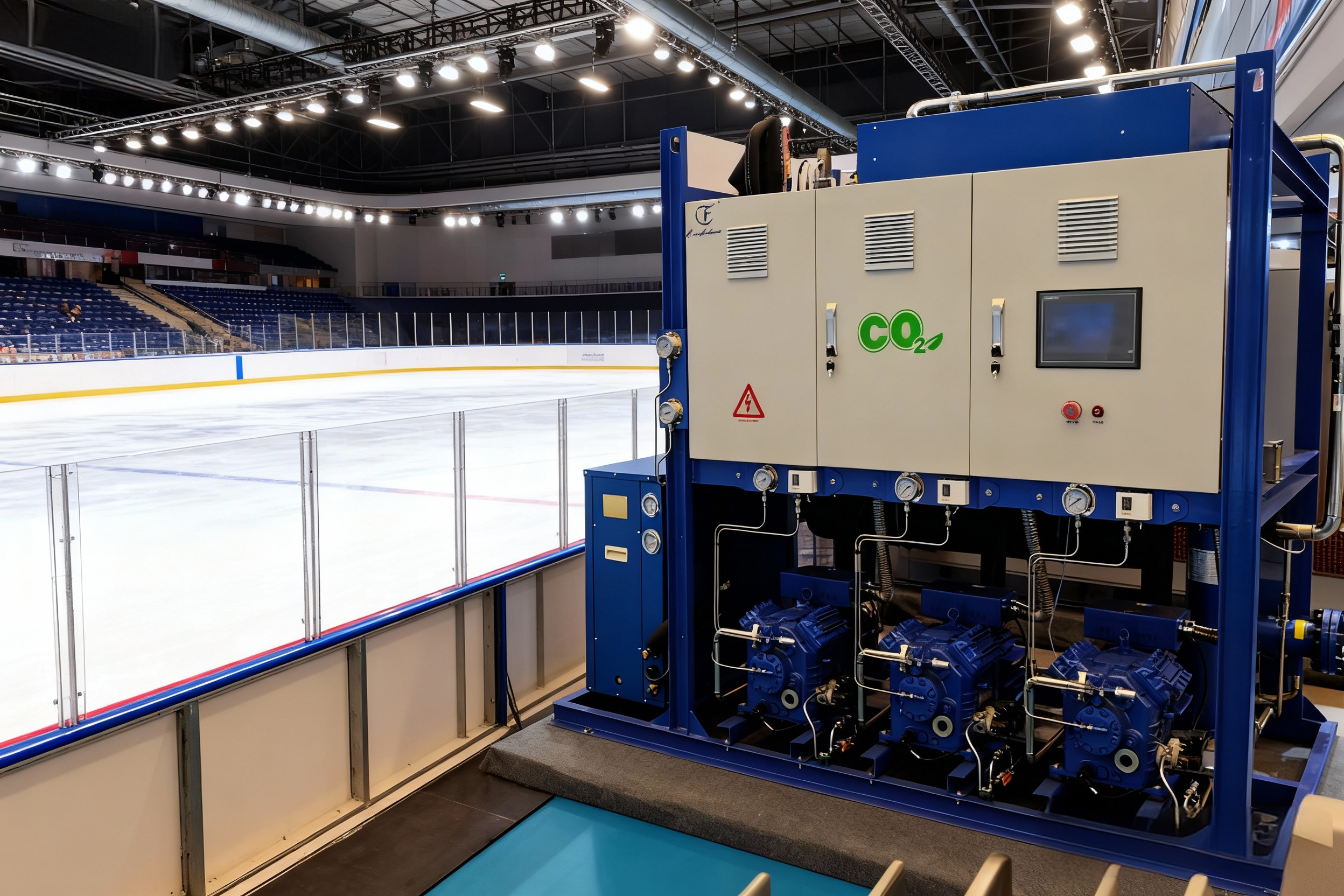
Request an itemized price for equipment, removal, transport, installation, controls, electrical work and changes to retained systems. Separate civil work, operator training, commissioning and spare parts. Define exclusions and the responsibility for coordination with other trades.
For energy comparisons, use the same operating season, weather assumptions and usage schedule. Ask which pumps, fans and auxiliary equipment are included. Treat projected savings as estimates until supported by comparable measurements. An observed change after replacement also needs to be interpreted alongside any change in rink use or building operation.
Agree on the commissioning record before placing the order. It should cover the specified temperatures and flow conditions, control sequences, alarms, and an operational demonstration under agreed conditions. Where the full seasonal duty cannot be demonstrated at handover, define any later verification and contractual treatment explicitly.
Send the rink location, dimensions, operating schedule, equipment nameplates, system drawings and a short description of the current problems. Include the assets you hope to retain, the intended shutdown window and the future operating plan. Attach photographs of the plant room, connection points and equipment access route.
Use our ice rink solutions as the starting point for discussing the project. Contact Focusun with the available records and request a preliminary scope review and quotation assumptions. Confirm the site assessment, local responsibilities and final equipment configuration before committing to a replacement schedule.
Sometimes, if the retained floor circuit and associated equipment are suitable for the proposed design. Assess condition, compatibility and flow requirements. Ask the proposal to identify which assets will remain and the evidence supporting that decision.
Not automatically. Check whether the original plant met the required duty and whether the operating plan has changed. Request a current assessment with stated design conditions, including the required ice-making schedule. Compare capacity at those conditions.
The closure depends on the agreed scope, removal access, retained equipment, installation work and commissioning plan. Obtain a project schedule that includes testing and ice preparation, not just delivery and mechanical connection. Allow for unresolved site conditions.
It may have a lower initial cost in some cases, but suitability depends on the existing equipment and the proposed conversion. Request an engineering assessment of performance, compatibility, remaining service life and applicable requirements. Compare the complete conversion scope with replacement, including expected maintenance.
Provide the location, rink dimensions, existing system details, operating schedule, problems to be resolved and desired completion date. Attach available drawings and photographs. State what you want to retain and which conditions remain unverified. Ask for a budget tied to these assumptions, with inspection-dependent costs identified separately.
Align the design duty, retained assets, installation scope and acceptance conditions first. Then compare capital cost, operating estimates, closure period and support. Review exclusions alongside the quoted total. Confirm who pays for electrical modifications and assessments of retained equipment.