
A block ice business can work well in Nigeria because many commercial customers need reliable cooling but cannot depend entirely on uninterrupted electricity or refrigerated transport. Fish traders, poultry processors, market vendors, event suppliers, construction companies, cold-room operators, and beverage distributors may all buy block ice regularly.
However, the business is more demanding than purchasing a machine and waiting for customers. Ice production consumes electricity and water, while the finished product must be harvested, stored, loaded, and delivered before melting losses reduce your margin. A profitable operation therefore needs to be designed as a complete production and distribution system.
Before investing, study the broader process described in this practical guide on how to start an ice factory. It explains why production capacity, storage, packing, utilities, and dispatch must be planned together.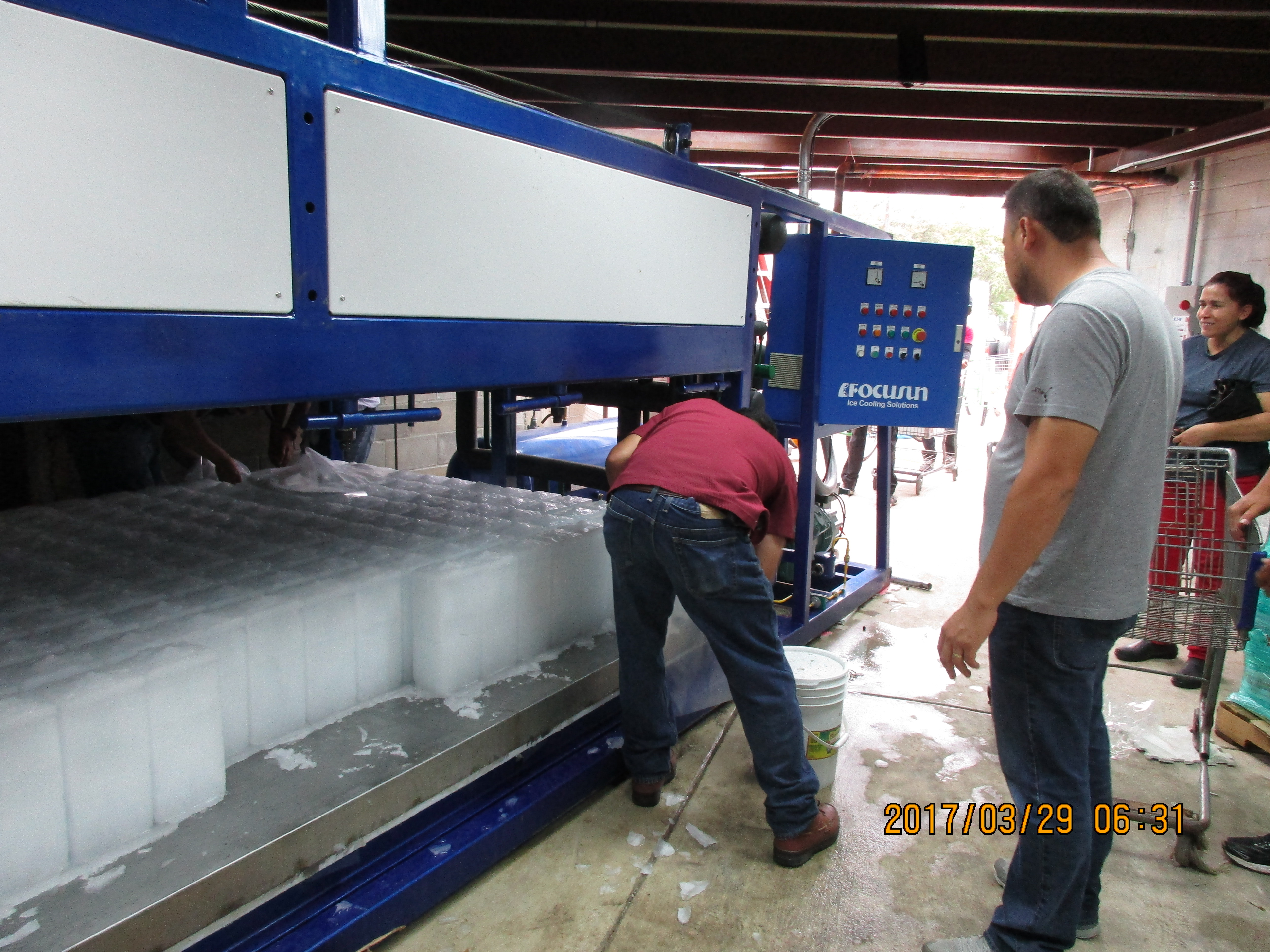
Do not begin by asking suppliers for the biggest machine you can afford. Begin by identifying customers within a realistic delivery radius.
Demand may come from:
Visit potential customers in person. Ask how much ice they buy, what size they prefer, what time they need deliveries, how demand changes during the dry season, and what problems they have with existing suppliers.
A fish trader may value long melting time more than appearance. A drinks supplier may want smaller blocks that workers can carry and break easily. A processor whose ice touches food will care about water quality, hygiene, and contamination control.
Record the information in a simple demand sheet:
|
Customer |
Preferred block size |
Normal daily demand |
Peak demand |
Delivery time |
Current purchase price |
|
Fish market |
25 kg |
80 blocks |
120 blocks |
5:00 a.m. |
Local price |
|
Event supplier |
10 kg |
30 blocks |
100 blocks on weekends |
Afternoon |
Local price |
|
Poultry processor |
25 kg |
20 blocks |
30 blocks |
7:00 a.m. |
Contract price |
Try to obtain serious expressions of interest from several customers before ordering equipment. A machine quotation is not proof of demand.
“Block ice” is not a complete product definition. You must decide the block weight, water standard, delivery format, and intended use.
Common commercial sizes may include 5 kg, 10 kg, 25 kg, and 50 kg, although the right size depends on your market. Smaller blocks are easier to carry and sell to households, bars, and small retailers. Larger blocks generally provide longer holding time and suit fishery, wholesale distribution, and industrial cooling.
Consider offering two sizes only if your production system can handle them without creating scheduling problems. Too many block sizes can complicate freezing cycles, molds, pricing, harvesting, and stock control.
You should also classify the product as either:
Do not produce food-contact ice using untreated water or a process designed only for industrial cooling. The equipment materials, water-treatment system, handling practices, floor drainage, worker hygiene, and storage conditions must all match the product claim.
For a deeper explanation of block sizes, applications, storage, crushing, and supporting equipment, see this industrial block ice machine guide.
Most investors eventually compare two production methods: direct cooling and brine freezing.
A direct cooling machine freezes water in metal molds cooled directly by the refrigeration system. Modern designs can harvest the blocks automatically using hot-gas defrosting.
This option is usually attractive when you need:
The initial equipment price may be higher, but savings in labor, space, and handling can compensate for the difference.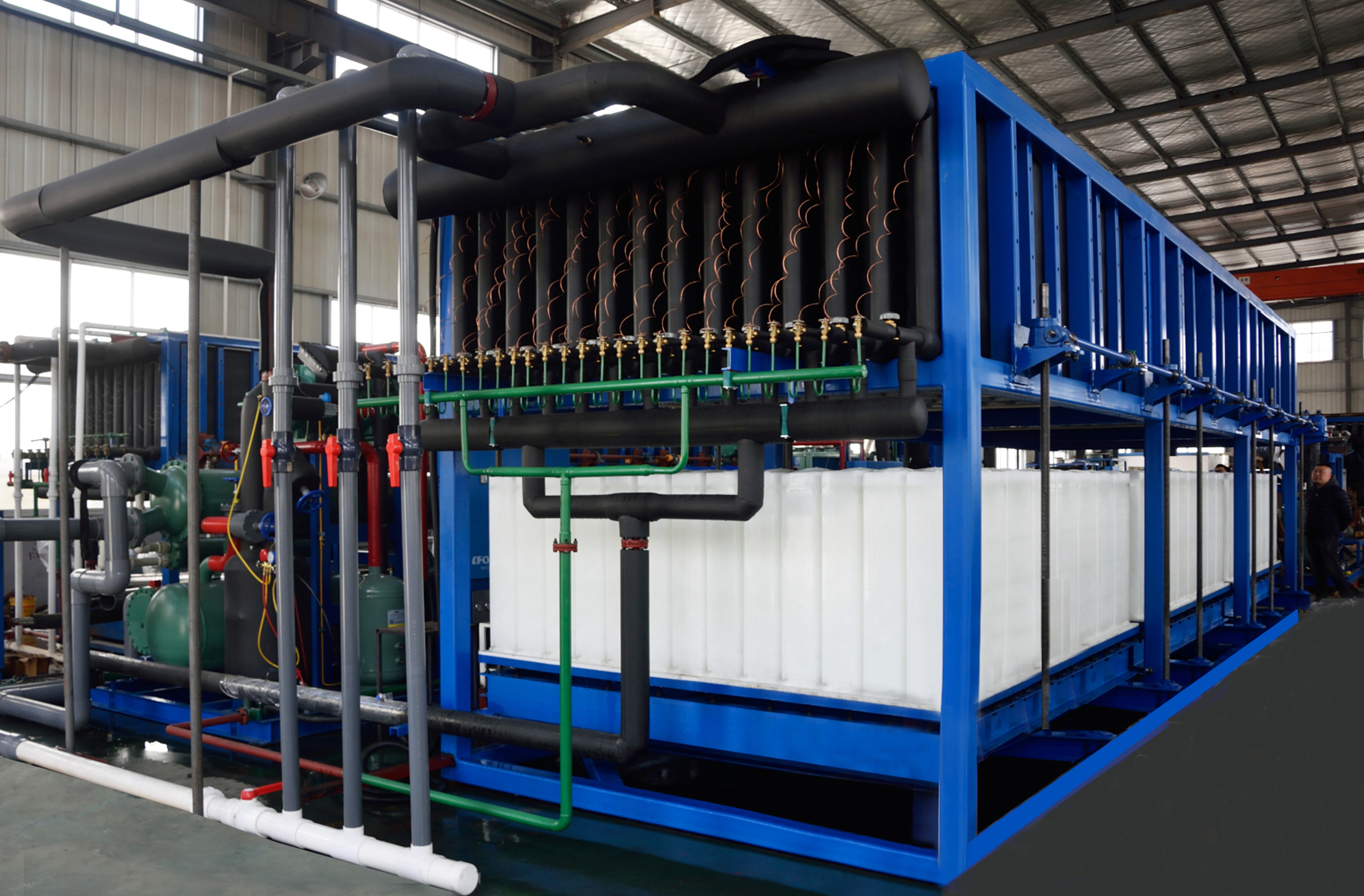
A brine system places water-filled ice cans inside a tank of chilled saltwater. Once frozen, the cans are lifted, warmed briefly to release the blocks, emptied, and refilled.
This system may suit businesses that have:
Brine systems are proven, but the surrounding workflow is more labor-intensive. Poor handling can also allow brine or dirty surfaces to contaminate ice.
The right choice depends on your site, labor model, hygiene requirements, customer mix, and total operating cost. This detailed comparison of brine versus direct cooling block ice machines is useful when evaluating the operational trade-offs.
Block ice machine capacity is normally stated in tones produced per 24 hours. Rated capacity should not be confused with guaranteed sales or actual output under every site condition.
Use this calculation:
Daily ice demand = number of blocks sold × weight per block
Suppose your market research identifies:
Then add a buffer for peak demand, melting, delayed freezing cycles, maintenance, and customer growth. With a 20% buffer, the planning requirement becomes 7.2 tones per day. An 8- or 10-tonne-per-day system may therefore be more practical than a 6-tonne machine.
Do not automatically oversize the plant. A large machine running with weak sales can create high electricity costs, unsold ice, and cash-flow pressure. It is often safer to select a modular system that can be expanded after the market is established.
Ask the manufacturer to calculate expected production using your actual:
A machine rated under mild factory-test conditions may produce less in a hot, poorly ventilated Nigerian installation.
The best site is not necessarily the cheapest building. It must support both refrigeration and delivery.
Look for:
Avoid low-lying sites that flood during heavy rain. Standing water, muddy loading areas, and open drains can quickly undermine a food-grade operation.
A sensible workflow moves in one direction:
Water treatment → water filling → freezing → harvesting → short-term storage → cutting or crushing → loading → dispatch
Workers should not carry dirty empty containers through the clean production area. Fuel, chemicals, tools, and maintenance materials should also be stored away from treated water and finished ice.
For a small plant, proximity to the market is particularly important. Block ice melts slowly, but long delivery routes still consume fuel, vehicle time, and product weight.
Power planning is one of the most important parts of a Nigerian ice project. Refrigeration compressors need stable voltage and may draw high current during startup.
Ask the supplier for:
Do not select a generator using running kilowatts alone. An undersized generator may start lights and pumps but fail when the compressor starts. Voltage fluctuation can damage contactors, motors, sensors, and compressor windings.
A practical installation may combine grid power with a properly sized generator. Solar can support offices, lighting, pumps, or parts of the auxiliary load, but operating a substantial refrigeration plant directly from solar requires careful engineering, suitable inverters, and adequate storage or hybrid generation. Do not accept vague claims that a large ice plant can run on a small solar package.
Install voltage monitoring, phase-failure protection, surge protection, proper earthing, and an automatic or clearly documented changeover procedure. Fuel consumption should be measured daily because generator inefficiency and fuel leakage can quietly destroy profitability.
Water quality affects safety, appearance, taste, machine condition, and customer confidence. Test the source before designing the treatment system.
Depending on the results, treatment may include:
Borehole water should not be assumed to be safe simply because it looks clear. Laboratory testing should guide the treatment design.
Where ice is intended for human consumption or food contact, Nigerian food-hygiene rules require it to be produced from potable water and protected from contamination during production, handling, and storage. The current requirements should be checked directly with the National Agency for Food and Drug Administration and Control. NAFDAC’s food-hygiene guidance specifically addresses the sanitary production and handling of ice.
Use washable food-contact surfaces, covered treated-water tanks, clean harvesting tools, proper drainage, handwashing facilities, pest control, and documented cleaning schedules. Workers should not stand on ice, drag it across the floor, or load it with dirty gloves.
The machine price is only one part of the project.
Your capital budget may need to include:
This industrial ice machine price guide can help with preliminary planning, but request a project-specific quotation. Freight, exchange rates, duties, local civil work, generator requirements, and automation can materially change the final investment.
Operating costs normally include:
Keep a contingency fund. Spending the entire budget on machinery leaves no cash for fuel, wages, repairs, or customer credit during the first months.
Calculate the contribution from one block before deciding that the business is profitable.
Contribution per block = selling price − variable production and delivery cost
Variable costs should include water, electricity or generator fuel, direct labor, packaging, delivery, and expected melting loss.
Then calculate:
Daily contribution = contribution per block × blocks sold per day
Monthly operating profit = monthly contribution − rent, salaries, security, maintenance, administration, and finance costs
Use conservative assumptions. If the machine can produce 400 blocks per day but your verified customers will buy only 220, calculate the business using 220. Do not treat unsold production capacity as revenue.
Run at least three scenarios:
Also test what happens if diesel costs rise, the exchange rate moves before equipment payment, or customers take longer to pay.
Register the enterprise through Nigeria’s Corporate Affairs Commission. The appropriate structure may be a business name or a limited liability company, depending on ownership, financing, customer contracts, and growth plans.
You may also need to address:
Pre-packaged ice sold for consumption falls within Nigerian food-labelling requirements. Relevant rules cover matters such as manufacturer information, storage instructions, batch identification, and the applicable NAFDAC registration number. Confirm the current process with NAFDAC before printing bags or labels.
Regulatory requirements can vary by product format and location. Speak with the relevant state and local authorities before signing a long lease or completing the factory layout.
A small ice plant still needs written procedures. At minimum, create checklists for:
Track actual output every day. If a 10-tonne plant begins producing only 8 tones, investigate immediately. Possible causes include warm inlet water, high condensing temperature, dirty filters, poor ventilation, refrigerant leakage, unstable voltage, incorrect settings, or longer harvesting cycles.
Maintain a local stock of critical items recommended by the manufacturer. Waiting several weeks for an inexpensive sensor, valve, or contactor can cost more in lost sales than the spare part itself.
The strongest block ice businesses usually combine production with dependable distribution.
Instead of waiting for customers to arrive, build scheduled routes:
Create separate pricing for factory pickup, scheduled wholesale delivery, and urgent delivery. Set a minimum order for distant customers.
Use simple order channels such as WhatsApp Business but maintain a proper dispatch record. Each order should show the customer, quantity, block size, price, payment status, driver, departure time, and returned quantity.
Do not offer unrestricted credit during the launch period. Production may be profitable on paper while the business runs out of cash because customers have not paid.
A professional quotation should provide more than a machine model and price. Ask for:
Request a complete scope-of-supply list. Confirm whether piping, refrigerant, electrical cabinets, pumps, hoists, water treatment, storage, crushers, and installation are included or excluded.
Compare quotations using three-year ownership cost, not purchase price alone. A cheaper machine that consumes more fuel, requires extra workers, or regularly stops during the hottest months may become the more expensive investment.
Interview customers, record daily demand, study competitors, confirm block sizes, test selling prices, and map delivery routes. Shortlist sites and check water and power availability.
Select the machine type and capacity. Obtain quotations for equipment, freight, installation, water treatment, power backup, civil work, and delivery vehicles. Prepare cash-flow projections and begin regulatory discussions.
Register the business, finalize the site, confirm permits, prepare the foundation and utilities, recruit key staff, and negotiate supply arrangements with anchor customers. Equipment procurement can then proceed against a verified specification.
The exact timeline will be longer where imported equipment, major civil work, or new electrical infrastructure is required. The purpose of the 90-day plan is to complete the commercial and technical groundwork before committing most of the capital.
Avoid these expensive errors:
It can be profitable when four conditions are present: verified repeat demand, controlled energy cost, efficient delivery, and dependable equipment. The best opportunities are often near fish markets, food-processing clusters, transport hubs, dense urban retail areas, and communities with weak cold-chain infrastructure.
Profit does not come from owning the machine. It comes from selling most of the daily production at a price that covers power, water, labor, delivery, maintenance, melting, and capital recovery.
Start with customer demand, design the plant around actual Nigerian operating conditions, and insist on a complete utility and production specification before paying for equipment. A smaller plant with committed customers and disciplined operations is usually a stronger business than a large machine with no dependable route to market.
