
An edible ice production plant is not simply a larger version of a commercial ice machine. It is a complete food-contact production system in which water quality, freezing performance, ice handling, temporary storage, weighing, packing and final dispatch all affect the finished product. For restaurants, hotels, beverage chains, supermarkets and packaged ice suppliers, the real objective is not only higher output. The objective is to produce clean, consistent and presentable ice every day without interrupting service or distribution.
A well-designed plant starts with the end use. Cocktail service may need clear ice that melts slowly. Soft-drink service may need standardized ice that is easy for operators to handle. Retail bagged ice must remain shape-stable, accurately weighed and tightly sealed. Catering demand may change from day to day, while an independent ice factory may require 24-hour production with a practical material flow for packing, palletizing, loading and storage. This is why Focusun edible ice solutions for catering are planned around real operating scenarios, not just around a single machine purchase.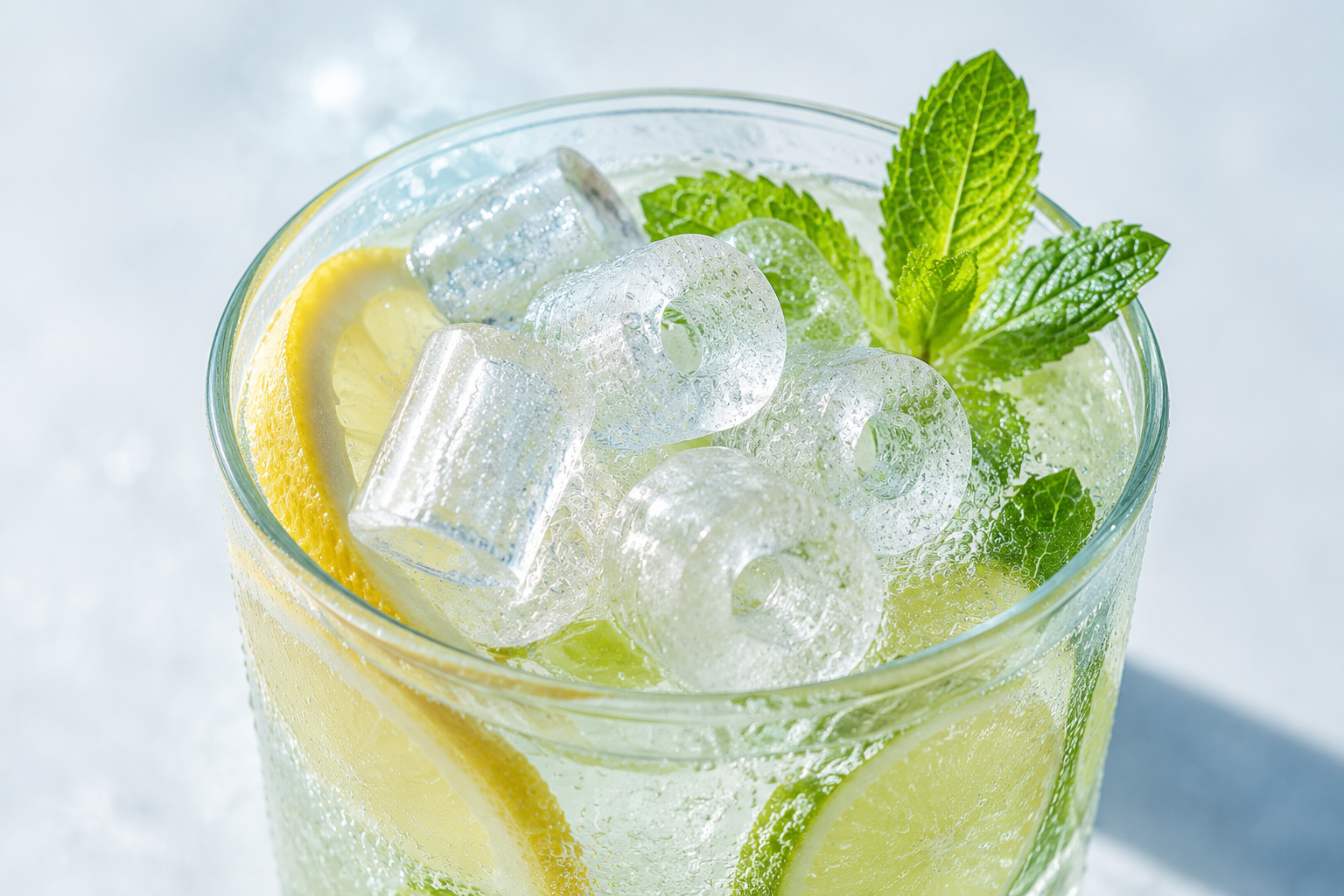
Ice that is consumed directly or mixed with beverages and food must be produced under a hygiene-first line design. Compressor power and nominal capacity matter, but they cannot compensate for poor water treatment, non-food-grade contact parts, open ice transfer, difficult cleaning or bad drainage. A plant can produce visually attractive ice and still create downstream problems if the ice is moved manually, stored in an open area or exposed to melting water before packing.
Consistency is the second requirement. Buyers of packaged ice, cafe chains, bars and restaurants expect repeatable ice dimensions, hardness, appearance and bag weight. Wet ice can stick together in bags. Ice that is too fragile can break during conveying. Unstable production can force the packing machine to wait for manual intervention, reducing the efficiency of the entire line.
The third requirement is line continuity. Edible ice production normally involves continuous freezing, intermittent packing cycles and variable storage needs. If those parts are not matched, the plant may look strong on paper while still performing poorly in daily operation.
A complete edible ice plant usually includes water treatment equipment, the ice maker, transfer equipment, an intermediate hopper, an ice room or cold storage area, and a weighing and packing system. The exact arrangement depends on the target ice type, daily capacity, packing format and dispatch method.
For beverage service and packaged ice, tube ice is one of the most common choices. A tube ice machine produces smooth, hollow cylindrical ice with good flowability. This makes tube ice suitable for bagging, drink chilling and automated handling. Because tube ice can move smoothly through hoppers and conveyors, it is often a practical option for ice plants that depend on automated packing lines.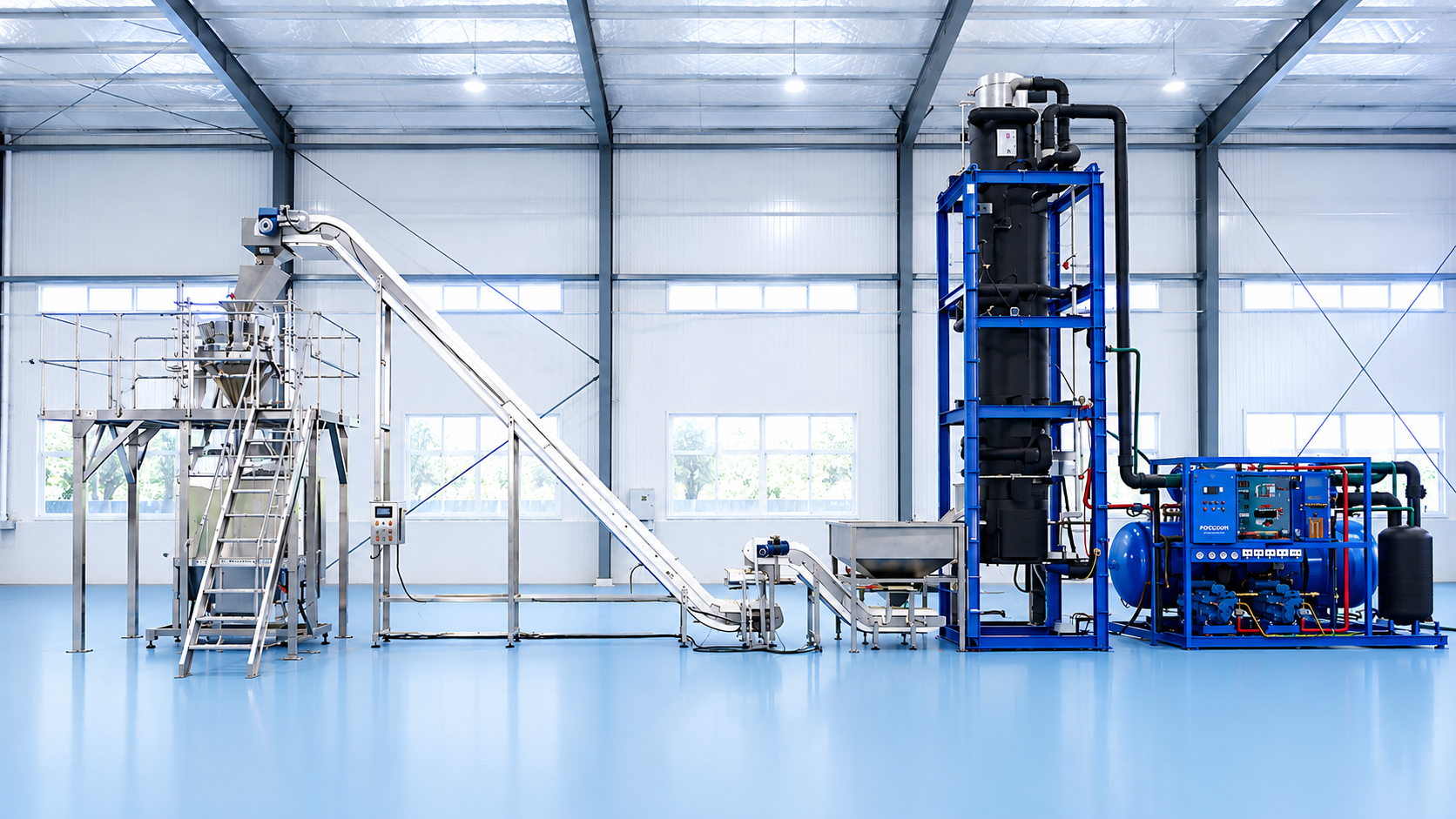
A cube ice machine is commonly selected for restaurants, coffee shops, milk tea shops, bars, hotels and convenience-store supply. Cube ice has a familiar appearance that staff and customers immediately recognize. In larger production plants, cube ice can also be combined with automatic weighing and bagging systems for retail or wholesale distribution.
The ice hopper is the buffer between the ice machine and the packing section. Its function is to balance continuous ice production with batch-based packing. When the ice machine keeps producing but the packing machine works in short cycles, the hopper prevents the line from stopping every few minutes. It also helps regulate discharge speed so that ice flows evenly into the next stage.
An ice conveyor then moves ice from the machine, hopper or storage area to the packing point or loading area. Proper transfer design reduces manual contact, lowers labor intensity, and helps protect ice from breakage and contamination.
For bagged ice businesses, the packing section is often where profit and waste are decided. An ice packing machine should weigh accurately, fill bags cleanly, seal strongly and support coding or counting when traceability is required. Accurate weighing reduces product giveaway. Strong sealing reduces broken bags. Coding and counting functions help operators manage inventory and distribution records.
A small local distributor may only need a semi-automatic bagging solution, while a high-volume edible ice plant will usually benefit from a fully automated line. Before selecting the equipment, buyers should compare bag size, target bag weight, hourly output, labor level and the ice type being packed. For deeper selection details, this automatic ice packing machine guide is a useful internal reference for planning the packaging section.
Storage should not be treated as an afterthought. Finished ice, especially retail bagged ice, may wait before delivery during peak seasons or scheduled distribution windows. A purpose-built ice room helps maintain product condition, reduce melting loss and organize loading. When a plant serves hotels, supermarkets or retail distributors, storage flexibility can be as important as daily production capacity.
The first capacity question is not simply "How many tons can the machine produce?" A better question is "How much sellable ice do you need at peak demand, after packing and storage constraints are considered?" A cafe may only need a compact commercial system. A restaurant group may need several tons per day. A packaged ice factory may require 10, 20 or 30 tons per day, with room for expansion.
Daily output should be calculated from actual demand variables: average sales, weekend peaks, seasonal growth, delivery timing, available storage volume, packing speed and labor arrangement. Many buyers oversize the ice machine but undersize the packing section or storage room. The result is a plant that appears powerful in specifications but cannot operate smoothly in practice.
Plant layout also affects capacity. Ice should move through a coherent path: water treatment, ice making, temporary storage, conveying, weighing, packing, frozen storage and dispatch. Shorter transfer distance reduces breakage and contamination risk. The layout also needs space for cleaning, maintenance, bag material storage, pallets and operators. A good layout saves labor every day.
For investors evaluating a new plant, Focusun also provides an ice factory setup guide that can be used as a broader planning reference before confirming the final equipment configuration.
In event catering, banquet service and seasonal food service, an edible ice plant helps stabilize supply during demand peaks. Restaurants and hotels use in-house ice systems to take control of ice quality instead of depending completely on outside delivery. Beverage chains and coffee brands use standardized ice to keep drink appearance and cooling performance consistent across outlets.
Retail bagged ice plants create a product with recurring demand from supermarkets, convenience-store distributors and food service buyers. These businesses require stable weight, sealed bags, clean handling and reliable cold storage. For them, automation and storage are not optional extras; they directly affect product quality, labor cost and delivery reliability.
Independent ice factories have a different priority: uptime. Their machines must operate for long hours, the packing line must run efficiently, and finished ice must remain ready for loading. For these operators, the ice plant is not a support system; it is the core business. In this case, automation, spare-parts availability, energy performance and after-sales engineering support should be evaluated before price alone.
Focusun designs ice machines and refrigeration systems for edible ice, catering, cold chain, seafood, food processing and industrial cooling applications. This wider refrigeration experience matters because an edible ice plant is not just about freezing water. It requires matching compressors, evaporators, water systems, storage rooms, hoppers, conveyors and packing equipment into one practical workflow.
A buyer may start with a single ice machine and later add storage or packing equipment. Another investor may plan a complete plant from the beginning. In both cases, better results come from selecting the equipment after confirming the ice type, target capacity, water conditions, local climate, available space, labor level and expansion plan.
For companies designing a new edible ice facility or upgrading an existing line, the best starting point is to define the real operating output, not only the machine name. Focusun can help compare tube ice, cube ice, storage, conveying and packing options, then configure the plant around the buyer's actual workflow. Related equipment can also be reviewed through the Focusun product catalogue before final project discussion.
What is an edible ice production plant?
An edible ice production plant is a complete system for producing, handling, storing and packing ice used in beverages or food service. It usually includes water treatment, an ice machine, a hopper, conveyors, cold storage and a packaging line.
How much does it cost to set up an edible ice production plant?
The cost depends on daily ice capacity, ice type, automation level, storage size and packaging requirements. A small catering unit costs far less than an automatic industrial ice factory. A reliable price should be calculated only after the layout, capacity and packaging format are confirmed.
Which is better for edible ice: tube ice or cube ice?
Tube ice is often better for packaged ice and automated handling because it flows well and is less likely to clump. Cube ice is widely used in drinks because the shape is familiar and visually acceptable to customers. The better choice depends on the buyer's end use and packing method.
How should I choose the size of a commercial edible ice plant?
Capacity should be based on peak sellable demand, not only average daily use. Hot-season sales, delivery frequency, storage time, packing speed and available labor should all be included in the calculation. Many plants are designed with expansion space so capacity can increase as sales grow.
Can an edible ice plant use automatic packing?
Yes. Semi-automatic or fully automatic packing can be used for weighing, filling, sealing, coding and counting bags. Automation reduces manual contact, improves bag-weight consistency and helps high-volume ice suppliers control labor cost.
Which hygiene features should buyers check?
Buyers should check food-grade stainless steel on ice-contact parts, easy-clean surfaces, safe drainage, enclosed or protected transfer where possible, and water treatment compatibility. Hygiene should be evaluated across the whole line, not only inside the ice machine.
Is an ice room necessary for edible ice production?
An ice room is usually necessary when finished ice has to wait before delivery or packing. It reduces melting loss, protects bagged ice quality and gives operators flexibility during peak production, transport delays or seasonal demand changes.
Can I start with a small ice production plant and expand later?
Yes. Expansion should be considered during the first layout design. Buyers should select equipment with layout flexibility, compatible hoppers and conveyors, and a supplier that can add more machines, packing upgrades or storage capacity when sales increase.
What companies usually buy edible ice production plants?
Typical buyers include ice factories, restaurants, hotels, catering companies, beverage chains, supermarkets, convenience-store suppliers and food service distributors. Each business requires a different balance of ice quality, output, automation, storage and packaging.
How should I select a supplier for an edible ice production plant?
Evaluate the supplier by project experience, customization ability, refrigeration layout design, hygiene-focused equipment, spare-parts support and after-sales service. A good supplier should discuss the buyer's real workflow before recommending a machine model.
